Showing posts with label Technology News. Show all posts

Unveiled yesterday, February 1, the Art Project is “a unique collaboration with some of the world’s most acclaimed art museums to enable people to discover and view more than a thousand artworks online in extraordinary detail.”


Over the past 18 months, Google and 17 prestigious art museums have worked together to bring art to you, giving the viewer an intimate and personal look into celebrated artists and artworks. The project includes a virtual gallery with 360 degree tours using Street View technology, super high resolution images, and the ability to curate your own collection and save it to the computer.


Can’t get to the palace of Versailles? Don’t worry, through the Google Art Project, you can still marvel at its gilt ceilings and lovingly decorated halls. Never had the chance to see a Rembrandt or a da Vinci or a Caravaggio up close? Always wanted to visit an Egyptian temple or stand before a grand statue of a Buddhist priest? Google’s got them all.


Discover the brushstrokes of a van Gogh painting or the intricate flowers in a Botticelli work, listen to audio guides, find notes on the history of each work and its artist, share your favorite work with friends, and explore each museum.


The seventeen museums participating in the project include:

Van Gogh Museum, Amsterdam

The State Hermitage Museum, St. Petersburg

Uffizi Gallery, Florence

The Frick Collection, New York City

Tate Britain, London

The State Tretyakov Gallery, Moscow

The Metropolitan Museum of Art, New York City

Rijksmuseum, Amsterdam

Museum Kampa, Prague

Alte Nationalgalerie, Berlin

Museo Reina Sofia, Madrid

Palace of Versailles, Versailles

Museo Thyssen-Bornemisza, Madrid

Freer Gallery of Art, Smithsonian, Washington, D.C.

National Gallery, London

Museum of Modern Art, New York City

Gemaldegalerie, Berlin


With over one thousand artworks on display, Google’s virtual museum is a groundbreaking new technological advancement in the museum world, bound to change the way we view and experience art. Works range from Louis Comfort Tiffany’s Autumn Landscape window at the Met, to The Ambassadors by Hans Holbein at the National Gallery, to the intricate 18th century Peacock Clock located in The State Hermitage Museum, to beautifully designed Islamic bowls from the Freer Gallery, to Botticelli’s La Primavera at the Uffizi, and to the large plaster sculptures of modern artist Miloslav Chlupac at the Museum Kampa. With Google Art Project, there is something for everyone, a chance to connect with art across the world and beyond our time.


Read more...
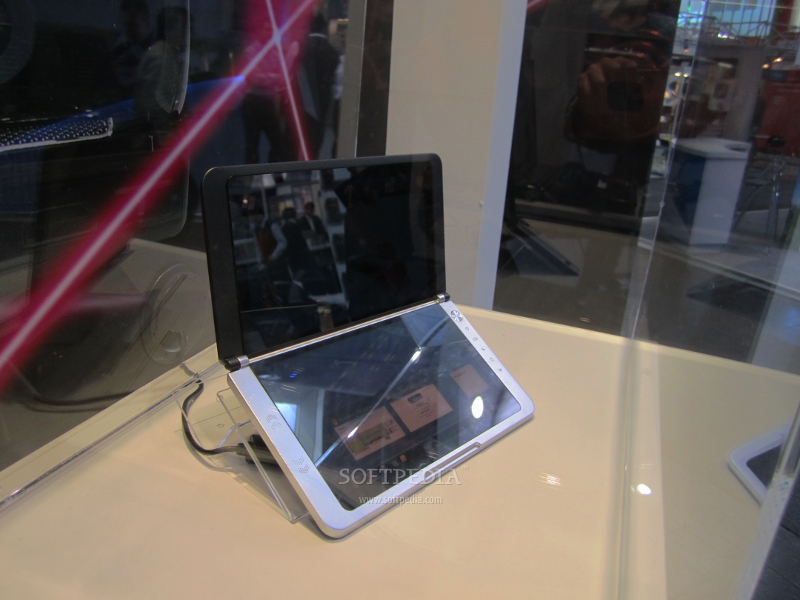
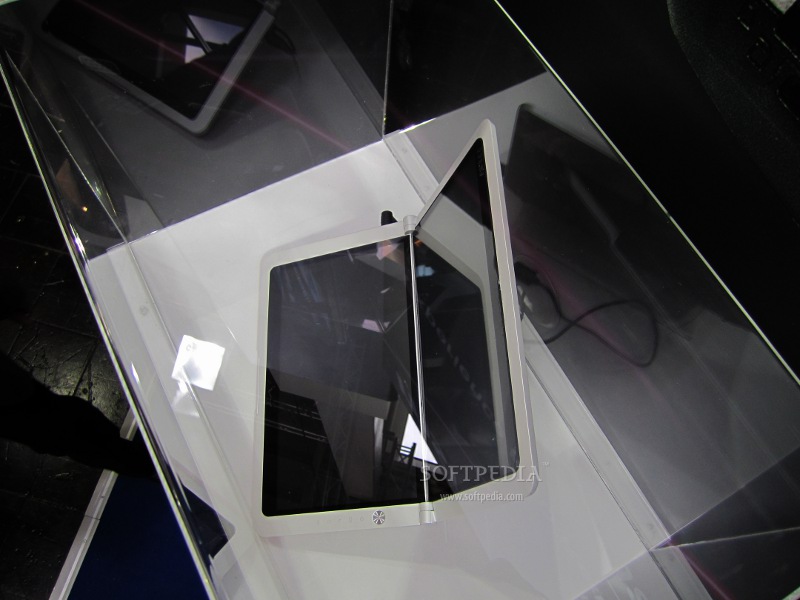
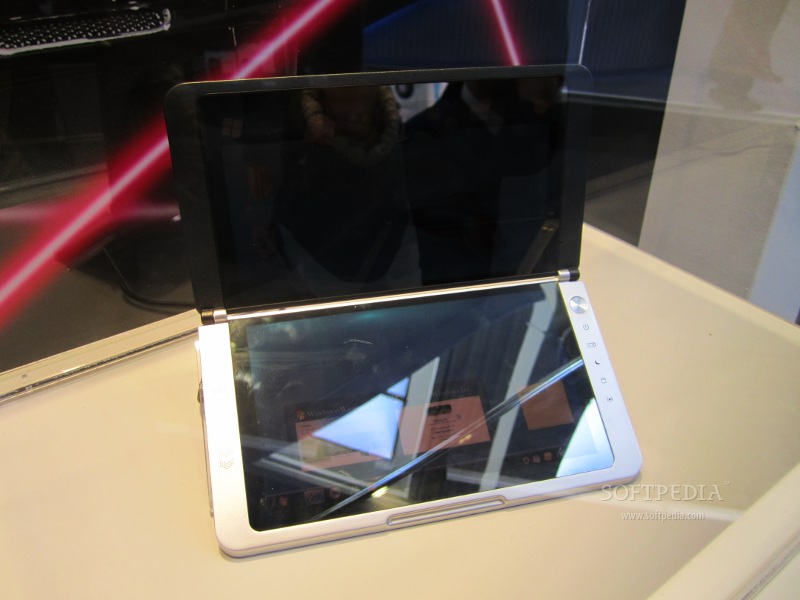
At last year's CeBIT, ASUS showcased what looked like a dual-display laptop concept that did away with the keyboard, relying solely on touch input. However, touch technology was not as advanced last year as it is now, which is likely the reason why ASUS has not been able, so far, to find a practical implementation for that device. Now, however, after a year's worth of technological advancements, MSI is showcasing a similar idea at the Hanover expo, although its product roadmap is just as vague as ASUS' was in 2009.


We have already managed to score some close-up shots of MSI's GT660 high-performance gaming notebook, the company's Hydra 200-enabled Big Bang Fusion motherboard and its 3D all-in-one desktop PC. With the short-term now covered, the company was able to look somewhat farther into the future of mobile computing.

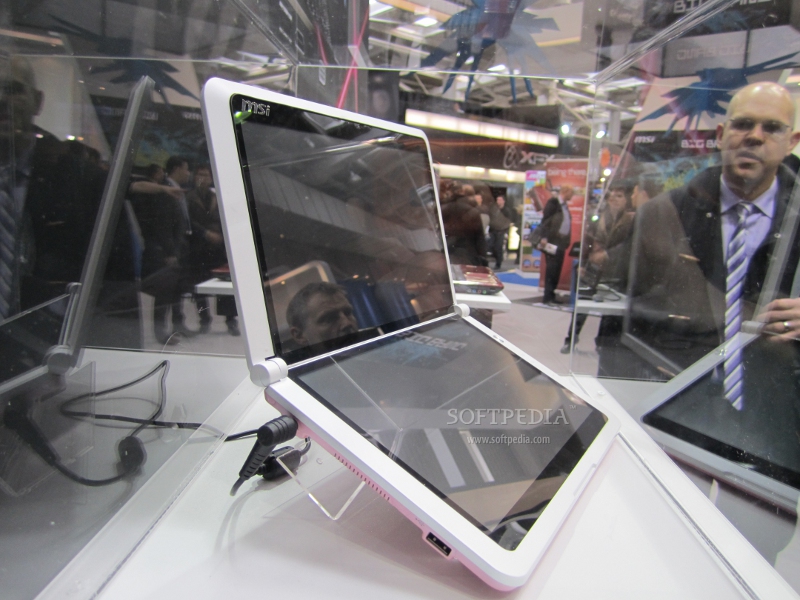
Basically, Micro-Star international has set up a nice exhibition of dual-display mobile PCs in multiple color themes. Dual display, in this case, does not refer to configurations that put two screens side by side in order to enlarge the workspace. Instead, the second display is built where the keyboard and touchpad usually lie. This means that MSI aims to eventually do away with the keyboard and touchpad entirely, relying solely on multitouch input.

The concept of dual-screen laptops could be seen as a preview of what all portable computers might eventually look like. Of course, the PC maker will somehow have to solve the problem of deteriorating touch films and use a more efficient backlighting technology in order to allow a decent battery life. Still, one cannot argue that the idea is, at the very least, interesting.

It remains to be seen whether the future of computing will inevitably bring about the death of keyboards, although, even if this eventually occurs, it will likely not be in the near future.


Read more...

As some of you will certainly remember, a few days ago, NVIDIA took a serious jab at its direct competitor in the GPU market, accusing it of tweaking drivers in order to obtain better benchmark results, and now, you'll be able to see what AMD has to say on this whole situation.


NVIDIA, with the backing of certain high-rated hardware sites, claimed that users had to push to “High” the Catalyst AI texture filtering setting for AMD 6000 series GPUs instead of the default “Quality” setting in order to provide image quality that comes close to NVIDIA’s default texture filtering setting.

Practically, NVIDIA claimed that the AMD Catalyst 10.10 drivers brought about a 10% performance advantage by lowering their default texture filtering quality in benchmarks, while reducing image quality in the process.

Those of you who've managed to go through our article on this topic will certainly remember that, at the time, we'd already contacted the company's reps in order to obtain an official answer to their competitors' very serious claims.

And sure enough, AMD was kind enough to provide us with an official comment, that we'll relay to you as follows:

We are committed to the PC gaming community and take all feedback on image quality very seriously. To that end, we have recently revisited the current default image quality settings used in Catalyst drivers and found them to be on par with the default settings provided by our competitor.

We take great care in determining the default settings of Catalyst drivers and believe current settings deliver a very good gaming experience.

To ensure the best possible experience for our customers, AMD provides the industry’s most comprehensive set of controls, allowing users of AMD Radeon graphics to find their own perfect balance between image quality and performance.

So, in other words, AMD sort of rebuffs NVIDIA's claims, without going into too many technical details (as compared to the green team, who was pretty on topic from this point of view).

Anyway, we'll just have to leave it as that for the time being, at least until we get a chance to see for for ourselves whether NVIDIA's claims are true or not, but until then, if you have encountered such problems with the Catalyst drivers, please, don't hesitate to relay it to us in the comments section.


Read more...

NVIDIA's Tesla GPUs have been getting quite a share of positive responses lately. Not only can they be used to create supercomputers that completely overshadow other clusters in the area of power efficiency, but they are capable of massive parallel processing tasks that make them quite suited to heavy computing operations. More recently, the well-known provider of computing security solutions, Kaspersky, announced that it began to incorporate the Tesla S1070 into its infrastructure in order to improve client protection.


The Tesla S1070 is based on multi-core graphics processors and it boosts the rate at which unknown filers are identified. This implies that Kaspersky was able to more easily and quickly respond to new threats. The actual performance delivered by the GPU in the speed of the similarity-defining algorithm was no less than 360 times better than that delivered by a system running a Core 2 Duo central processor clocked at 2.6 GHz.


"As our company aims to provide the best protection to our users, we actively employ advanced technologies to accelerate computing," Nikolay Grebennikov, chief technical officer for Kaspersky Lab, stated. "We could not ignore the advantages of modern graphics processing units (GPU). In terms of efficiency they have long been far ahead of central processing units (CPU) аnd the tasks that they are capable of performing have gone beyond the scope of basic graphics processing. The architecture of the GPUs is optimized for the parallel processing of large data arrays and we have already started to use this attribute to provide our clients with an even better level of protection from new malicious programs."

Obviously, any performance boost to security solutions will be well received, especially soaring ones such as this. Kaspersky used the NVIDIA CUDA SDK development environment to redevelop and simultaneously perform the hundreds of thousands of operations included in the similarity algorithms (which compare files against the unknown program received by the Company's antivirus lab). This was possible thanks to the fact that the environment allowed for the use of standard programming languages when writing programs for NVIDIA graphics processors.

"The ever increasing sophistication of computer viruses continues to be a big problem for consumers and corporations alike," Andy Keane, general manager, Tesla business at NVIDIA, added. "Kaspersky Labs continues to stay ahead of the curve by employing very novel change management and file similarity detection techniques that, with the help of NVIDIA Tesla GPUs, can quickly identify new threats and update the anti-virus software."

NVIDIA's GPU computing solutions are set for further integration into Kaspersky's infrastructure for better client and, possibly, the company's own protection.


Read more...

While most people don't really comprehend the potential danger data stored onto their various mobile devices can be in, should the respective product fall into the wrong hands, the truth of the matter is that there are plenty of devices available on the market nowadays that will enable even people with little experience in the field of “hacking” to extract info from a smartphone, one such item being the iRecovery solution we'll talk about as follows.


The iRecovery Stick, presented by SpyGadgets, enables users to recover text messages, phone call history, internet history, contacts, pictures and graphics, calendar entries, map history, and much more, all the content being stored within an Apple iPhone 4's memory.

As mentioned before, using the iRecovery is a fairly simple process, which prompts users to firs plug the stick into a computer, and the connect the iPhone to the computer.

After this part of the process is done, they'll have to run the iPhone Spy Data Recovery Stick program, and it will begin scanning the iPhone for data, the whole scanning phase taking approximately 20 minutes per GB, so depending on how much data is the phone, the process will take a little bit of time.

Once the data recovery process is complete, users will be presented with all of the data in an easy-to-read table format that allows one to easily find whatever information they are looking for.

According to the vendor, the software should run without a hitch on iOS versions up to 4.x, while the OS compatibility includes the Win98/XP/2000/Vista/7 operating system (strangely or not quite so, this thing is not compatible with Macintosh OS).

As we pretty much expected, pricing for such a device is pretty high, the iRecovery Stick having a MSRP of around 260 US dollars, which is not exactly a very small sum, but we'll probably have to say that it's worth it, given the level of functionality it enables.


Read more...

After the GF2's been rumored and leaked for quite some time now, Panasonic has decided that it's about time to finally release its latest DSL Micro (DSLM) compact mirrorless camera, the LUMIX DMC-GF2 being touted as being the company's smallest and lightest interchangeable lens system camera that comes complete with a built-in flash.


One of the most important selling points of the brand-new LUMIX GF2 is the fact that it's actually compatible with lenses from the Micro Four Thirds standard, as well as Panasonic's new 3D interchangeable lens, the LUMIX G 12.5mm / F12, thus making it quite a contender on the future as well.

The LUMIX GF2 is extremely easy to operate for consumers at any level, thanks to a newly- designed user interface, which allows for the focus to be set, or shutter released, by simply touching the large 3-inch touch-screen LCD, that also delivers a 460,000-dot-resolution.

It's also important to mention that the 12.1-megapixel Live MOS sensor featured in the LUMIX GF2 delivers the image quality of a CCD sensor, plus the lower power consumption of a CMOS sensor, while the Venus Engine FHD image processor offers high performance signal processing capabilities in both photo and movie recording.

The contrast AF system adopted by the LUMIX DMC-GF2 is not only accurate and easy to use, but also very fast, users being able to choose from a wide range of AF (Auto Focus) modes, including multiple-area AF with up to 23 focus areas, 1-area AF with a selectable focus area, Face Detection, and AF Tracking.

Much like most other digital cameras out there, the new LUMIX GF2 can record 1920 x 1080 videos at 60i or smooth HD 1280 x 720 movies at 60p in AVCHD, as well as HD Motion JPEG in 1280 x 720 and QVGA, VGA and WVGA, all by pressing the dedicated video record button.

"The LUMIX GF2 is key in the Panasonic DSL Micro line-up, as it's the smallest and lightest model we offer, while still offering superb image quality, which our consumers have come to expect from LUMIX,” said Darin Pepple, Senior Product Manager, Imaging, Panasonic Consumer Electronics Company.

“Compared to the GF1, its predecessor, the GF2 has been reduced approximately 19% in size and approximately 7% in weight yet is still retains its signature built-in flash."

“We expect the LUMIX GF2 to be an attractive model for consumers who want to step up to a more powerful camera that is easy to use, and a camera that is 'future-proof' with its 3D capabilities," concluded Darin Pepple.

Unfortunately, the bad news is that you won't be able to add the Lumix GF2 to your Christmas shopping list, since the new camera will only arrive in stores in January 2011, pricing being announced around a month prior to the shipment time.

However, we do know that the DMC-GF2 will sport an aluminum body, will be available in black, silver, white, and red models and will offer the following kit options: DMC-GF2C – 14mm F2.5 Lens Kit and DMC-GF2K – 14-42mm Zoom Lens Kit.


Read more...

Packt Publishing just finished announcing their last winner in their 2010 Open Source
Awards festivity.

Each day in the last week, Packt recognized a project in one of their 2010 Best Open Source Awards categories.


Even if for some awards everybody sensed and expected certain projects to win even before the votes were counted (jQuery and WordPress), the race was close in the other categories.

After their most recent announcement, the final winners' table for 2010 looks like this:

Monday: Most Promising Open Source category (Pimcore)

Tuesday: Open Source E-Commerce Applications category (PrestaShop)

Wednesday: Open Source Graphics Software category (Blender)

Thursday: Open Source JavaScript Libraries category (jQuery)

Friday: Open Source CMS and Hall of Fame CMS categories (CMS Made Simple and WordPress)

After we previously announced Monday Pimcore winning the “Most Promising Open Source Project” award, out-voting Tomato CMS and BuddyPress, Twitter just caught fire with the #Packtpub hashtag waiting for the next announcements.

The Packt Awards week continued as follows.

Tuesday, Packt announced PrestaShop as this year’s best e-commerce open-source application, racking up more votes than second placed OpenCart and third place TomatoCart.

Other e-commerce solutions in this category included well-established Magento and nopCommerce.

It was a surprise that Magento didn't win, but maybe their split OS-commercial pricing system dented their chances at winning the big prize not being considered a full open-source project.

Wednesday a new category was awarded, the “Open Source Graphics Software Award,” which in its inaugural year went to Blender, a soft for 3D modeling, animation, rendering, and game creation.

Truly a great app, Blender founder Ton Roosendaal, was very happy receiving this award: “I'm very proud of getting the confidence from voters and winning the 2010 Open Source Graphics Software Award! This awards the hard work of hundreds of people who are working on blender.org for software development, documentation and support, not to forget the enthusiastic artist community supporting the project.”

Second place went to raster graphics image editor GIMP, while Inkscape, a SVG graphics editor arrived in third.

Other nominees in this category included Scribus and jMonkeyEngine.

On the fourth day, Thursday, everyone expected jQuery to win, and they didn't disappoint.

With statistics from BuiltWith.com placing jQuery's usage at almost 40% of all Internet sites, no surprise was expected in this category.

Second came MooTools and Raphael in a tie, while projects like ExtJS and Dojo Toolkit being just happy to be nominated and get recognition for their last year's work in maintaining their code base.

Friday two awards were given, one for “Open Source CMS” and the other for “Hall of Fame CMS.”

The first one recognized the efforts made by smaller open source CMS projects in developing and advancing their project's state in the last year, while the second category recognized the advances made by former winners of the Open Source CMS Award in previous years, now considered to be in the Hall of Fame due to their huge success and wide-spread usage.

The prize for best 2010 Open Source CMS went to CMS Made Simple, a project that grew exponentially in quality and code quantity in recent years, getting more and more support and plugins from their community members.

As we also noticed here at Softpedia in our Scripts index, CMS Made Simple made bold moves and changed drastically, proving a real involvement in their project in 2010.

Second and third places went to SilverStripe, respectively MODx.

Other nominees included MojoPortal and a constant presence in the Packt Awards in previous years, XOOPS.

The 2010 Hall of Fame Award results hints in our mind that this may be the beginning of a long domination period for WordPress, hands-down the best and biggest open-source CMS project currently on the web.

This is WordPress' first year in the Hall of Fame category after previously winning the Best Overall Open Source CMS Award in 2009.

Maybe the award is also a direct consequence of WordPress 3.x.x coming out this year, but even with alpha and beta versions of Drupal 7 and Joomla 1.6 being also released in 2010, there hasn't been that much rave and excitement like the one caused by WordPress 3.

And why not give the award to WordPress, since Drupal has been trying to emulate WordPress' success with its Drupal Gardens project, a hosted Drupal solution, similar to WordPress.com.


Read more...

The United States Army has launched a new video sharing website accessible only from behind its firewall to offer troops a more secure YouTube alternative.

Dubbed milTube, the new service is the latest addition to milSuite, a pack of Web 2.0 sharing and collaboration solutions created and used by the Department of Defense.


Since the website can only be accessed from within the Army's computer network, videos posted on it are protected from unauthorized viewing.

Military forces around the world are increasingly confronted with the problem of soldiers sharing restricted information on social media websites.

Videos previously uploaded by soldiers on YouTube depicted military excercises, weapons or senior officials, images that shouldn't be in the public domain.


"Video is an extremely powerful tool for storytelling and sharing information among personnel," said Justin Filler, deputy director of the MilTech Solutions Office, the Army organization in charge of milSuite.

"MilTube provides a secure, internal environment for those connections to take place across the Armed Services," he added.

Like YouTube, milTube allows videos to be organized with channels, categories and tags. Content can be easily searched, viewed and uploaded even from military bases with bandwidth restrictions.

The service is designed to determine a user's connection limits and adjust video quality accordingly. It also supports multiple formats and audio-only streams.

The Department of Defense plans to use the system to share training videos, ceremony recordings and news clips with the troops.

MilSuite currently has 88,500 users and in addition to milTube, it provides a wiki system (milWiki), a blog platform (milBlog) and a social networking site (milBook).

Access to all of the services is achieved via AKO (Army Knowledge Online) or DKO (Defense Knowledge Online) credentials.

Even though earlier this year the Army started removed restrictions for several social media websites from its non-classified network (NIPRENET), YouTube was not one of them.


Read more...

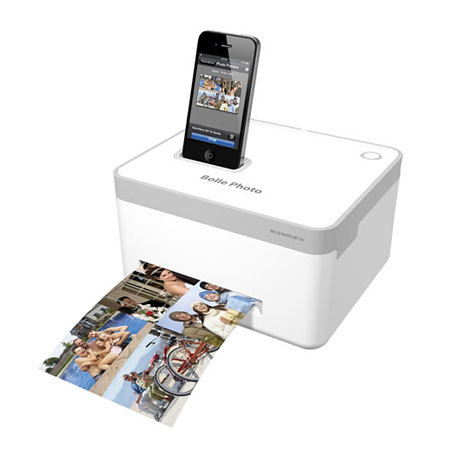
We've seen a whole lot of gadgets capable of docking Apple's iPhone up until now, most of which also came equipped with speakers and audio playback capabilities, but the Bolle BP-10 Printer is really something else, since this device will actually enable users to print out the photos stored within the iPhone's memory in a very fast and easy manner.


Presented by UK online retailer MobileFun, this printer provides full size 4 x 6 inch photographs, on dedicated photo paper, at a very good image quality (at least as far as what the company's reps have to say about it).

Bolle provides a free app, which can be downloaded directly from the iTunes store and installed on the user's iPhone in order to select photos from the photo album or take a brand new photo using the application.

Using the iPhone with the Bolle BP-10 printer is also an extremely easy task, since users won't have to do anything else but slot the iPhone into the dock, choose the picture which they want to print then click the corresponding print button.

There is also settings to change the partitions to get multiple photo's on one page so you can create a passport style picture.

Plus, if you happen to require several copies of the same photo (up to 4), there's also an option for printing out multiple photos as well.

In terms of compatibility, it would seem that the docking printer from Bolle is quite versatile, the device supporting just about every iPhone ever released, including the original iPhone, as well as the iPhone 3G, iPhone 3GS and iPhone 4.

Pricing for the Bolle BP-10 Printer has been set at a cool 120 pounds sterling (roughly 191 US dollars), which is actually a pretty OK price point, especially for those hardcore iPhone users that love to take photos of just about everything around them.


Read more...

Apple has released iOS 4.2.1 for iPhone, iPad and iPod Touch, which addresses a flurry of critical security vulnerabilities, including the screen lock bypass discovered last month.


In total, over eighty security issues have been patched in the new version, with some components getting multiple fixes.

By far, the biggest number of vulnerabilities were identified and addressed in the WebKit layout engine (27). Many of them have also been patched in Safari last week.

Forty fixes in this release are for the iPad only, 4.2.1 being the first 4.x version supporting the device. iPhone and iPod touch have already benefitted from these patches in iOS 4 and iOS 4.1.

The update also resolves several arbitrary code execution vulnerabilities in components like FreeType, libpng, libxml, OfficeImport or Telephony.

Some of them could have been leveraged in drive-by download attacks in a similar fashion to how exploits were used by the JailbreakMe service.

Other security fixes target a low impact bug in Safari where clearing stored passwords can take longer than expected, a MobileMe password leak issue in the Photos application, as well as a privilege escalation and a denial of service weakness in the Networking component.

In addition, an unauthorized remote request problem was identified and patched in Mail, along with a call initiation issue in iAd Content Display.

iOS 4.2 addresses a bug which allows attackers to mislead users into installing maliciously crafted configuration profiles.

The lock screen bypass bug discovered at the end of October, which allowed users to make phone calls and access the address book on locked iPhones via a button combination, has also been resolved.

The iPhone Dev-Team reports that all devices remain theoretically jailbreakable thanks to the limera1n boot ROM exploit, but only the iPhone3G, older iPhone3GS, and non-MC iPod touch 2G currently benefit from a untethered 4.2.1 jailbreak.

The team is still working on a untethered solution for newer devices, so you might want to hold on updating for now. Also, if you are using the ultrasn0w carrier unlocker, you should definitely stay away from 4.2.1 and all official firmware updates, as they will remove it.


Read more...

One of the strong points of Microsoft's Windows Phone 7 platform is the fact that comes with the full Office package embedded. Basically, every Windows Phone 7 smartphone has Microsoft Office Mobile apps included, so there's no need for the user to download anything.

The Office Mobile package can be accessed from the Start, in the app list, but can also be pinned on the Homescreen. It includes apps such as: Microsoft Word Mobile, Microsoft Excel Mobile, Microsoft PowerPoint Mobile, Microsoft OneNote Mobile and Microsoft SharePoint Workspace Mobile.

Users can create new documents or read and edit existing ones on their phone with Microsoft Word Mobile.

WM7 phone owners have several options of sharing the documents from their smartphone such as by saving back to the shared document on a SharePoint site, sending a link to the document on the SharePoint site in email or by simply sending the document itself in email.

SharePoint is a website that lets users share and work together on documents, projects and schedules. Thanks to the Microsoft SharePoint Workspace Mobile, which is a part of the Office Mobile package, users can open, edit and save Microsoft Office documents that are on a SharePoint wesbite.

To access a SharePoint site using SharePoint Workspace Mobile users have to set up a Wi-Fi connection that lets them access a SharePoint site on their company's network.

The same sharing process can be used for Microsoft Excel workbooks or PowerPoint presentations.

As a side note, users should be aware of the fact that they cannot save new Microsoft Office documents on a SharePoint site from their phones using SharePoint Workspace Mobile. They can only edit and save the document if it is already on the SharePoint website.


Read more...